Glitch, Rewind, Resist: Why Gen Z Is Going to War With Streaming Using 8-Tracks and Minidiscs
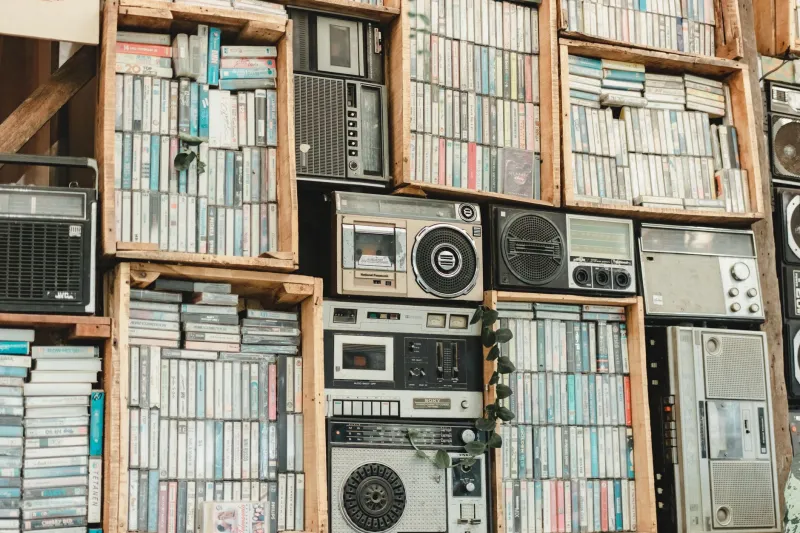
While Spotify argues over royalty fractions and Apple Music redesigns its interface for the fourteenth time, a growing crew of young collectors is doing something that looks crazy on paper and feels completely sane in practice — hunting down 8-track tapes and MiniDiscs at thrift stores, estate sales, and the darker corners of eBay. They're not doing it because they grew up with these formats. Most of them weren't alive when the last MiniDisc player shipped. They're doing it because the formats are broken, forgotten, and entirely outside the reach of any algorithm. And right now, that feels like freedom.
The Formats Nobody Wanted Back
Let's be clear about what we're talking about here. The 8-track cartridge was a format so awkward it would change tracks mid-song. It peaked in the mid-1970s and was largely dead by the early '80s. The MiniDisc was Sony's ambitious attempt to replace the cassette in the early '90s — better sound quality, rewritable, genuinely impressive engineering — and it was absolutely demolished in the marketplace by the CD and later the MP3. Neither format has any logical claim to a comeback.
And yet.
In cities across the US — Chicago, Portland, Austin, Philadelphia, the outer boroughs of New York — young collectors are building libraries of these things. Facebook groups dedicated to 8-track hunting have seen membership spikes. MiniDisc forums that were essentially digital ghost towns five years ago are now active communities full of people under 30 swapping unit recommendations and sourcing blank discs from Japanese import stores.
"I found my first 8-track at a Goodwill in Wicker Park for seventy-five cents," says Dani Reyes, a 22-year-old from Chicago who now owns over 300 cartridges. "It was a Stevie Wonder compilation and the shell was cracked but it still played. Something about that felt more real than anything I'd streamed in years."
More Than a Vibe
It would be easy — and a little condescending — to write this off as pure aesthetics. Yes, there's something undeniably cool about the chunky physicality of an 8-track cartridge, the weird retro-futurism of a MiniDisc player, the particular warmth and flutter of degraded audio. These formats have a visual and tactile presence that a Spotify playlist simply cannot replicate. That matters.
But spend any time actually talking to these collectors and a more pointed argument emerges. This is, at least in part, a political act.
"When I buy a MiniDisc, I own it," explains Marcus Webb, a 25-year-old collector in Portland who runs a small zine about physical media culture. "I can record on it, copy it, give it to someone. Spotify can pull an album from the platform and suddenly you just... don't have it anymore. I've had playlists disappear. I've had albums I loved vanish overnight because of some licensing dispute I had no part in. With physical media, that can't happen."
That sense of ownership — genuine, unrevokable, not subject to a corporation's quarterly decisions — comes up constantly in these conversations. In an era when streaming platforms have effectively convinced an entire generation to rent their music libraries indefinitely, the idea of actually possessing something feels radical.
The Hunt as Ritual
There's also something to be said for the experience of finding these things. Streaming has made music infinitely accessible and somehow, paradoxically, less meaningful. When everything is available instantly, nothing feels like a discovery.
The thrift store hunt is the opposite of that. It requires time, patience, and a tolerance for disappointment. You might dig through a bin of 200 cartridges and find nothing worth taking home. Or you might pull out a sealed 8-track of Funkadelic's Maggot Brain for two dollars and feel like you've found buried treasure.
"It's the same feeling as finding a great record at a crate dig," says Reyes. "Except nobody else is looking in the 8-track bin. It's just you and a bunch of forgotten stuff."
That sense of solitude and discovery is part of the appeal. These formats exist in a space that algorithmic recommendation engines haven't colonized. No one is serving you MiniDisc suggestions based on your listening history. The discovery is entirely your own.
The Sound of Imperfection
And then there's the actual audio. This is where things get interesting to anyone who cares about how music sounds rather than just what it contains.
8-tracks have a distinctive warmth — partly the analog tape, partly the slightly degraded quality of cartridges that have been sitting in someone's garage since 1977. The channel-switching glitch, that brief moment of silence or overlap when the tape moves from one program to the next, is technically a flaw and sonically fascinating. MiniDiscs use a compression format called ATRAC that, when you're listening to a disc that's been dubbed multiple generations, produces its own set of artifacts — a kind of digital shimmer that sounds nothing like the clean sterility of a modern stream.
For ears raised on the hyper-compressed loudness of contemporary production, these imperfections aren't flaws. They're texture. They're proof that the music existed somewhere physical, that it passed through machines and time and someone's hands before it got to you.
What It Actually Says
Zooming out, this trend is part of a larger generational conversation about what music is for and who gets to control it. The vinyl revival has been well-documented at this point. Cassette culture never really died in certain underground circles. But 8-tracks and MiniDiscs represent a different kind of reclamation — formats so thoroughly written off that even the nostalgia industry hasn't figured out how to monetize them yet.
That's the sweet spot. Uncommodified, inconvenient, and entirely yours.
"I think about it like this," says Webb. "Every format that gets declared dead is just a format that the music industry stopped making money off of. That doesn't mean the music stopped being good. It just means nobody's trying to sell you anything with it anymore."
In a cultural moment defined by subscription fatigue and platform anxiety, that kind of freedom — however clunky, however glitchy, however reliant on finding a functioning player on eBay — sounds pretty good.
Tune in. Drop out. Hit eject.