Black Metal Is Tripping Out: How America's DIY Metal Underground Found Its Third Eye

Photo by Photo by foto DIAL on Unsplash on Unsplash
There's a moment in certain black metal records — the older stuff, the raw stuff — where the static and the shriek and the blast beats collapse into each other so completely that the whole thing stops sounding like music and starts sounding like weather. Like a blizzard inside your skull. For decades, that sensation was the genre's ceiling. The aesthetic demanded coldness, minimalism, a kind of deliberate ugliness that kept the music sealed inside its own mythology.
That ceiling just got blown wide open.
Across basements, bedroom studios, and small DIY venues from Asheville to Portland to Detroit, a loose constellation of American artists is doing something genuinely strange and genuinely exciting to black metal. They're soaking it in reverb so deep it sounds like sound itself is dissolving. They're layering in field recordings — wind through desert brush, rain on a car hood, the hum of electrical infrastructure — until the guitars feel geological. They're running synths through patch bays that would look at home at a Eurorack meetup, not a metal show. And they are, in the most literal sense, expanding the genre's consciousness.
The Gatekeepers Can't Stop This
Black metal has always had a gatekeeping problem. The genre's most vocal traditionalists treat any deviation from the established sonic orthodoxy — the lo-fi production, the specific tuning, the ideological posturing — like a personal insult. There's a long, ugly history there that a lot of younger American artists are actively pushing against.
What's interesting is how they're doing it. Not by arguing. Not by manifesting. By making music so immersive and so genuinely disorienting that the argument becomes irrelevant. When a record sounds like you've been dropped into a sensory deprivation tank that's also somehow on fire, the rulebook stops mattering.
Artists operating in this space are pulling from ambient music, drone, psychedelic folk, and experimental electronic production in ways that feel less like genre-blending and more like genre-dissolving. The darkness is still there — it's not like anyone's writing happy songs — but it's been stretched and warped into something that functions more like a headspace than a genre.
Field Recordings and the American Landscape
One of the most compelling threads running through this scene is the use of environmental sound. Where classic black metal drew its atmosphere from the idea of Scandinavian wilderness — vast, hostile, mythologized — American artists in this space are working with their actual surroundings. And the American landscape, it turns out, is plenty weird.
Think about what the Midwest sounds like at 3 a.m. The particular flatness of it. Or the Southern Gothic strangeness of swamp country. Or the way the desert Southwest has this almost hallucinatory quality to it, especially in summer heat. Artists are capturing these environments on cheap handheld recorders, chopping them up, layering them under guitar and synth, and letting them breathe through the whole sonic architecture of a track.
The effect is something like memory, or like a dream about a place you've never been. It's atmospheric in the truest sense — it creates an atmosphere, a pressure, a temperature. And it's deeply, specifically American in a way that feels new for a genre that spent decades looking to Europe for its sense of place.
Synths at the Edge of the Abyss
The synthesizer integration happening in this scene deserves its own conversation. We're not talking about symphonic metal keyboards here — no orchestral swells, no dramatic strings patches. What these artists are doing with synthesis is closer to what you'd hear from ambient or dark drone producers: slowly evolving pads, pitch-shifted textures that hover at the edge of recognition, oscillators set to frequencies that feel more physical than musical.
Some of these artists are running modular setups alongside their guitar rigs, letting the two systems bleed into each other in ways that are deliberately unstable and unpredictable. The result is music that sounds genuinely alive — not in the organic, warm way that acoustic music sounds alive, but in the way that something large and ancient and indifferent to human concerns sounds alive. It's unsettling in the best possible way.
Who's Actually Listening?
Here's the genuinely surprising part: the audience for this stuff isn't just metal heads. Record stores and streaming playlists in this space are seeing listeners crossing over from experimental electronic, from ambient, from psychedelic rock. People who would never in a million years put on a traditional black metal record are finding something in this mutated, expanded version of the genre that resonates.
That crossover makes a certain kind of sense. The function this music serves — the altered-state thing, the ego-dissolution thing, the sense of being sonically overwhelmed in a way that quiets the chattering mind — is exactly what a lot of experimental music listeners are chasing. Black metal, at its most extreme and immersive, has always been capable of that. This new generation is just making it more accessible, or at least more legible, to ears that weren't already trained on blast beats and tremolo picking.
DIY or Die (Tripping)
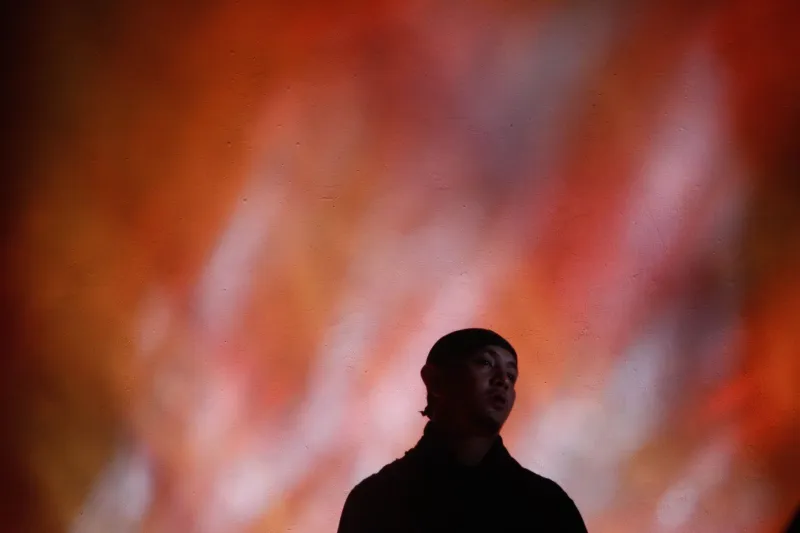
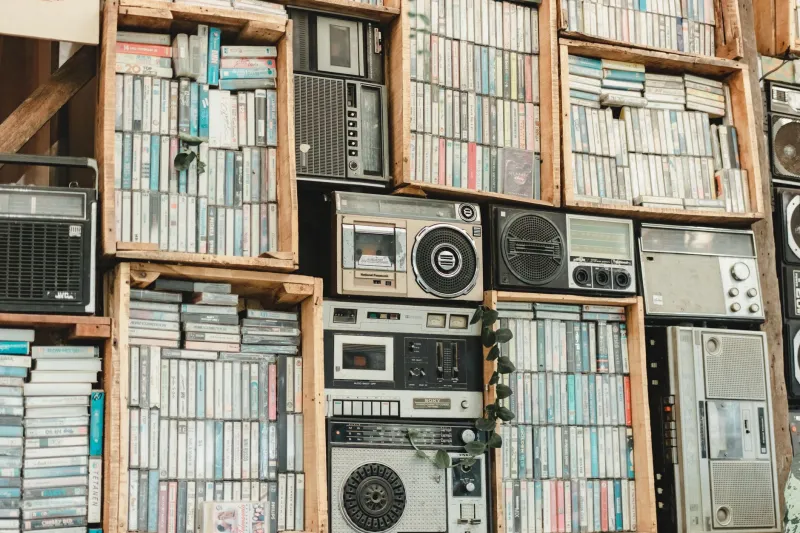
None of this is happening on major labels or even most indie imprints. It's cassette tapes run off in editions of one hundred. It's Bandcamp pages with handwritten descriptions and album art that looks like it was designed in a fever. It's shows in art spaces and converted warehouses where the PA system is questionable and the lighting is three red bulbs and a fog machine.
That DIY context isn't incidental to the music — it's constitutive of it. The lo-fi production choices, the limited runs, the refusal to optimize for streaming algorithms — all of it contributes to a sense that this music exists outside the normal channels of cultural consumption. You have to seek it out. You have to work for it a little. And when you find it, it sounds like it was made specifically for that kind of listener: someone who's willing to go somewhere strange.
Black metal found its third eye in a basement somewhere in America. And it's not coming back down.