Counterfeit or Catalyst? How Dirt-Cheap Eurorack Clones Are Blowing the Doors Off Experimental Music
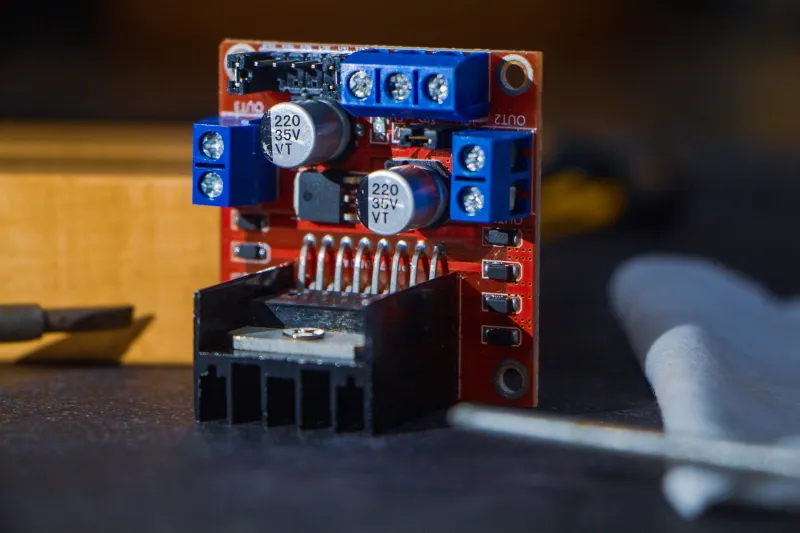
There's a joke that used to circulate in Eurorack forums: the cheapest module in your rack is the one you haven't bought yet. For years, building a modular synthesizer in the United States meant hemorrhaging money at a pace that made guitar pedal collecting look fiscally responsible. A single oscillator from a boutique manufacturer could run you $400. A quality filter? Another $300. A halfway functional patch could easily total more than a used car. The dream of modular synthesis — that infinite, brain-melting, cosmos-collapsing sound design frontier — was, for most people, exactly that. A dream.
Then the clones showed up.
The Flood Gates Open
Over the past three or four years, a surge of affordable Eurorack-format modules — many manufactured overseas, some assembled from open-source DIY kits, others sold by small domestic operations cutting costs with clever engineering — has fundamentally shifted the economics of experimental music production. You can now find functional VCOs, filters, and envelope generators on Reverb and eBay for under $50. Full beginner skiff setups that would have run $1,500 in 2018 can now be pieced together for under $400 if you're patient and willing to do a little soldering.
For a lot of bedroom producers, that number isn't theoretical. It's the difference between making experimental music and watching someone else do it on YouTube.
"I literally could not have started without the clones," says Marcus Webb, a 24-year-old ambient and noise artist based in Detroit who performs under the name Pale Meridian. "I was working part-time and living with roommates. There was no version of this where I spend $600 on a Mutable Instruments Plaits. But I could spend $45 on a clone that does basically the same thing. That module is how I found my sound."
Webb's case isn't unusual. Across the US, a new generation of modular artists — many of them younger, many from working-class backgrounds, a lot of them people of color and women who've historically been frozen out of expensive gear culture — are citing budget clones as the reason they're in the game at all.
Open Source, Open Questions
Here's where things get philosophically thorny. Not all clones are created equal, and not all of them exist in the same ethical territory.
A significant chunk of the affordable module explosion traces back to the open-source ethos that once defined a lot of boutique synthesis culture. Mutable Instruments, one of the most beloved Eurorack manufacturers in history, released all of its hardware designs under open-source licenses before its founder Émilie Gillet wound the company down in 2022. That decision was intentional — a gift to the community, an invitation to build, remix, and iterate. Clones of Mutable modules exist with the blessing baked into the original design philosophy.
But not every manufacturer has been so generous, and not every clone respects those lines. Some modules on the market are straight-up copies of proprietary designs — same panel graphics, same branding, same everything — sold at a fraction of the cost by factories that paid nothing for the R&D. That's a different conversation, and it's one the modular community is having loudly.
"There's a real spectrum here," explains Dara Kim, a synthesis educator and performer based in Portland who runs workshops introducing underrepresented communities to modular gear. "On one end you've got fully legit DIY kits built on open-source designs, which are amazing and I recommend them constantly. On the other end you've got stuff that's just straight theft from small designers who are barely keeping the lights on. The problem is that to a newcomer, those two things can look identical in a product listing."
Kim's workshops have become a kind of front line in this debate — a place where the democratization argument and the ethics argument have to coexist in the same room.
The Purist Pushback
Predictably, not everyone in the modular world is celebrating the clone era. The forums simmer with frustration from longtime practitioners who watched small American and European manufacturers build entire microcultures around their designs, only to see those designs undercut by mass production.
The argument from the purist corner isn't just about snobbery, though snobbery is certainly present. It's about sustainability. Small modular manufacturers operate on razor-thin margins. They're often one or two people, sometimes operating out of a garage, hand-soldering boards and writing firmware updates in their spare time. When a clone captures a significant chunk of their potential market, it doesn't just sting — it can end the company.
"I get why people buy clones. I really do," says one small module designer from the Midwest who asked to remain anonymous. "But when I see a direct copy of my panel design selling on Amazon for a third of what I charge, that's not democratization. That's someone else profiting from my years of work. There's a version of this story where the clones kill off the original designers, and then there's nothing left to clone."
It's a real tension, and there's no clean resolution to it. The same market forces that handed Marcus Webb in Detroit his first oscillator are, in some configurations, the forces quietly strangling the designers who invented the sounds he fell in love with.
Building Different
What's less debatable is the cultural shift happening at the edges of experimental music as a result of all this accessible gear. The modular scene in the US is visibly, audibly changing. The sounds coming out of budget rigs aren't worse — they're different. Artists who came to Eurorack through necessity rather than luxury tend to patch differently, think differently, embrace limitations differently.
There's a long tradition in underground music of constraints becoming the mother of invention. Punk didn't need a Les Paul. Hip-hop didn't need a recording studio. And the new wave of modular artists building on $40 oscillators and hand-soldered filter kits isn't making inferior music — in a lot of cases, they're making weirder, more personal music, because they never absorbed the orthodoxies of the expensive gear world.
"When you can't afford to buy the 'right' module, you figure out how to make the wrong one do something beautiful," says Webb. "That's kind of the whole point, isn't it?"
Tune In on a Budget
For anyone looking to enter this world without torching their savings, the landscape of legitimate, affordable options has genuinely never been better. DIY kit manufacturers like Befaco and Noise Engineering offer build-it-yourself versions of quality designs at significant discounts. The open-source community around platforms like Mutable's legacy designs has spawned dozens of trustworthy builders. And the secondhand market — particularly on Reverb — is full of older modules from reputable makers at prices that would have seemed impossible five years ago.
The conversation about clones, counterfeiting, and community isn't going away. But neither are the artists who got here because the door finally cracked open wide enough to let them through. Whatever you think about the ethics of the clone economy, the music being made on its other side is real, it's strange, and it's worth hearing.
The modular dream used to belong to people with money. Increasingly, it belongs to everyone willing to pick up a soldering iron and trip out.


