Ghost Signal: The Rogue Broadcasters Beaming Experimental Music Into the Ether on Frequencies Nobody Owns

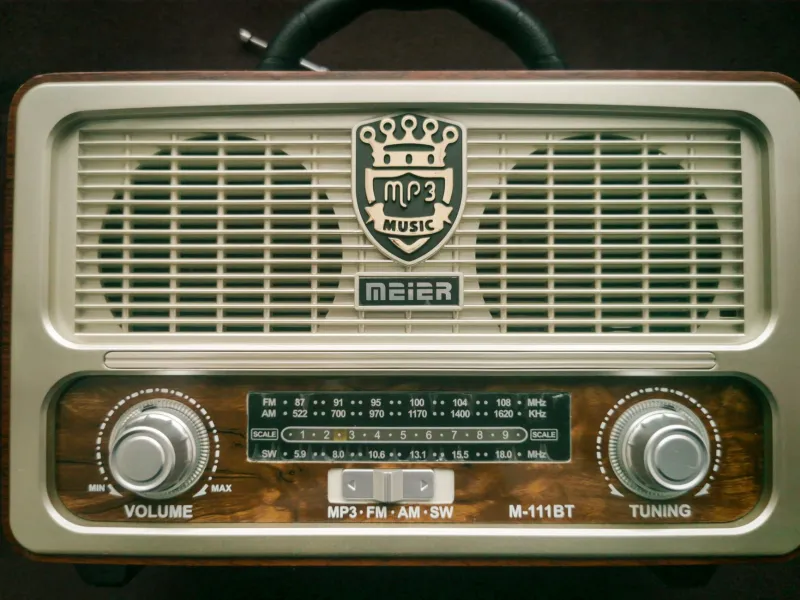
Somewhere between 87.7 and 88.1 FM — that narrow, slightly cursed stretch of dial that commercial radio mostly ignores — a transmission is happening right now that you weren't supposed to find. No playlist. No algorithm. No Spotify-approved mood tag. Just a producer in a rented warehouse, a 40-watt FM transmitter, and a live feed of modular synthesis dissolving into tape loops and back again.
Welcome to the ghost signal underground.
The Dial as Countercultural Weapon
Pirate radio is not a new concept. It has roots in the offshore British stations of the 1960s, the community FM rebellions of the 1970s, and the hip-hop and dance music free radio movements that lit up cities like Chicago, New York, and Miami throughout the '80s and '90s. But what's happening now feels different — less about reaching the masses and more about deliberately not reaching them.
The producers plugging into unlicensed frequencies in 2024 aren't trying to compete with iHeartRadio. They're trying to escape the entire framework of music distribution as it currently exists. Streaming royalties that barely cover a cup of coffee. Social media algorithms that punish anything longer than 90 seconds. Spotify editorial playlists that require you to have a manager who knows someone who knows someone. The underground FM movement is, at its core, a rejection of all of it.
"The stream is a leash," says one Brooklyn-based noise producer who goes by the handle Ferrite and has been running an unlicensed broadcast out of Bushwick on and off for two years. "When I put something on FM, I can't track who heard it. I can't see the play count. I have no idea if fifty people tuned in or five. And that's the whole point. It exists and then it's gone."
How They Do It (Without Getting Caught)
The technical barrier to low-power FM broadcasting has never been lower, which is part of why this scene is expanding. Hobbyist-grade FM transmitters capable of reaching several city blocks sell on Amazon for under $50. More serious operators — the ones pushing a quarter-mile radius or more — source their gear from overseas electronics suppliers or build their own rigs from open-source schematics circulating on forums that feel like they haven't been indexed by Google since 2009.
The FCC technically prohibits unlicensed FM broadcasting above 0.01 watts without a license, and enforcement does happen — particularly in dense urban areas where interference with licensed stations becomes an issue. But enforcement is inconsistent, resource-limited, and often reactive rather than proactive. The underground knows this.
Tactics vary. Some collectives broadcast in short, unpredictable windows — two hours on a Tuesday night, then dark for three weeks. Others rotate frequencies slightly to avoid pattern recognition. A few use directional antennas to limit their signal footprint to a specific neighborhood or even a single city block, creating what one Chicago-based collective calls a "hyper-local séance."
Frequency selection matters enormously. The low end of the FM band (87.7–88.1) and certain gaps in the upper band (around 107.7–107.9) tend to have less commercial competition in many US markets, making them less likely to draw complaints from licensed neighbors. Producers share frequency maps the way graffiti writers used to share transit system blueprints — carefully, and only with people they trust.
The Sound That Lives There
What actually gets broadcast on these ghost signals? That depends entirely on who's behind the transmitter.
In Los Angeles, a collective called Pale Carrier has been running irregular transmissions since 2022 that blend field recordings from the Angeles National Forest with drone synthesis and processed speech samples. Their sessions run anywhere from 45 minutes to six hours, with no fixed schedule and no advance announcement. The only way to know they're on is to scan the dial.
"We treat every broadcast like it might be the last one," says a member who identifies only as Vessel. "There's a real urgency to it. You can't skip to the good part. You can't replay it. It's just happening, and then it's not."
In Detroit — a city with deep roots in both techno and independent radio culture — a loose network of producers has been using unlicensed low-power FM to distribute collaborative sessions that would never survive the compression and normalization requirements of streaming platforms. The dynamic range alone would get them flagged. On FM, it hits the way it was intended.
In Austin, a duo called Mesquite Static specializes in what they describe as "ritual country" — heavily processed Americana built on altered guitar tunings, shortwave interference, and drum machine patterns designed to sound like they're decaying in real time. Their transmissions reportedly include listener interaction via a separate CB radio channel, creating a feedback loop between the broadcast and whoever happens to be scanning.
The Legal Gray Zone Nobody Wants to Talk About
Let's be real: unlicensed FM broadcasting in the US is illegal above a certain power threshold. Nobody in this scene is pretending otherwise. But the community has developed a fairly nuanced understanding of how enforcement actually works versus how it reads on paper.
The FCC's primary concern is interference with licensed broadcasters, aviation communications, and emergency services. A 15-watt transmitter on a frequency with no licensed neighbors in a mid-sized city is a very different risk profile than a 150-watt rig stomping on a news-talk station in a major market. The former might never draw a second glance. The latter will get a field agent knocking on your door.
Some operators have explored the Low Power FM (LPFM) licensing pathway, which the FCC opened more broadly in 2013 to community and noncommercial broadcasters. But LPFM licenses come with restrictions — no commercial content, fixed location, limited power — that don't fit a scene built on mobility, anonymity, and maximum weirdness. The license is the leash in a different form.
"You get licensed and suddenly you have an address on file with the government and you have to file paperwork and you can't move your antenna," Ferrite says. "That defeats the entire spiritual purpose."
Why It Matters Beyond the Thrill
It would be easy to frame this whole movement as pure romanticism — producers cosplaying as outlaws because the aesthetic is cool. And sure, some of it is that. The FM pirate has a certain mythological weight in underground music culture that makes it irresistible to a generation raised on stories of Frankie Knuckles and Ron Hardy playing all-night sets to rooms that didn't exist on any official map.
But there's something more substantive happening here. The ghost signal underground is articulating — in the most literal possible way — a theory of music distribution that puts the listener experience above the data point. That treats a broadcast as an event rather than a product. That insists on the irreproducible, the ephemeral, the thing that can't be screenshotted and posted.
In an era when every listen is logged, every skip is analyzed, and every playlist placement is a business negotiation, the unlicensed FM transmission is almost aggressively human. It's music that exists in real time, in physical space, for whoever happens to be there.
The dial is still wide open. Whether you find the signal is up to you.