Static Is the Message: How Underground Producers Are Turning Intercepted Radio Signals Into Pure Sonic Alchemy
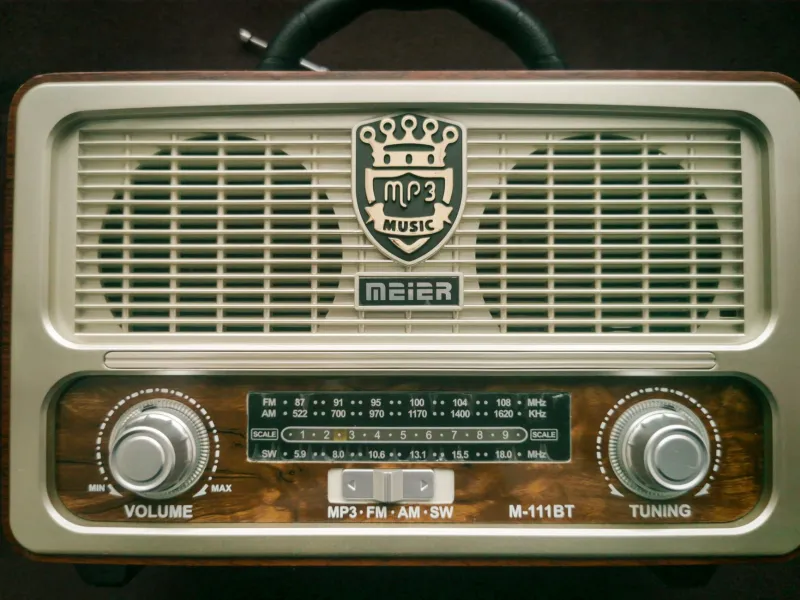
There's a moment, if you've ever sat alone with a shortwave radio at 2 a.m., when the static stops feeling like noise and starts feeling like something breathing. A voice emerges — clipped, mechanical, reciting strings of numbers in Spanish or Russian or Mandarin — and then it's gone. Swallowed back into the hiss. If you're a normal person, you shrug and go to bed. If you're one of a growing number of underground producers scattered across the US, you hit record and start building a track around it.
Welcome to the world of ghost frequency music — a practice that sits at the intersection of experimental composition, radio piracy mythology, and straight-up sonic obsession. It doesn't have a clean genre name yet. It probably shouldn't.
The Spectrum as Instrument
The basic premise is deceptively simple: the electromagnetic spectrum is absolutely flooded with transmissions. Military communications, numbers stations, aircraft weather data, utility company signals, maritime distress channels, pirate radio broadcasts, and the decaying echoes of Cold War infrastructure — all of it is bouncing around out there, available to anyone with the right receiver and the patience to listen.
Producers working in this space treat that invisible noise landscape the way a crate-digger treats a thrift store record bin. You don't always know what you're going to find, but when you find something, it hits different.
"The thing about a sample from a record is that it's already been processed through someone else's aesthetic," says Dex Moreau, a Chicago-based producer who records under the alias Null Meridian. "When I pull a transmission from a numbers station or an old aeronautical frequency, I'm getting something that was never meant to be music at all. That rawness is everything."
Moreau's setup is deliberately lo-fi: a vintage Grundig shortwave receiver, a handful of SDR (software-defined radio) dongles that cost less than a decent lunch, and a DAW loaded with granular processing plugins. He'll spend entire nights scanning frequency ranges, recording hours of material, and then spending weeks sculpting those recordings into dense, unsettling compositions that sound like transmissions from a world that almost existed.
The Technical Side: Getting the Signal
For producers just getting into this space, the barrier to entry is genuinely low — and that's a big part of why it's exploding in underground circles right now. An RTL-SDR dongle (a tiny USB device originally designed for TV reception) can be had for under $25 and, paired with free software like SDR#, opens up a massive swath of the radio spectrum. Shortwave radios capable of picking up international broadcasts and numbers stations can be found for under $50.
From there, the workflow varies wildly depending on the artist. Some producers sample raw audio directly, processing transmissions through granular synthesizers, pitch-shifters, and spectral tools to extract tonal material from what sounds like pure static. Others use their SDR setups as live performance instruments, routing signals through effects chains in real time.
Brooklyn-based artist Vera Strand, who performs as Coldwave Intercept, takes the live approach. Her sets involve a real-time shortwave scan projected visually on a waterfall display behind her — the audience watches the signal landscape shift as she sculpts audio from whatever the spectrum is offering that night.
"No two sets are the same because the frequencies are never the same," Strand explains. "Weather conditions, solar activity, what's happening geopolitically — all of it changes what I can receive on a given night. I've had sets where I pulled in what sounded like a Russian military exercise and I had no idea what I was actually hearing. That uncertainty is the whole point."
The Legal Gray Zone (And Why Nobody's Sweating It)
Here's where things get interesting — and a little murky. In the US, receiving radio transmissions is generally legal. Rebroadcasting or disclosing the contents of certain encrypted or private communications is where the Communications Act starts getting twitchy. The specifics depend heavily on the nature of the transmission and what you're doing with it.
Most producers in this space operate under a de facto "don't ask, don't tell" philosophy. They're not decrypting classified military communications or publishing the contents of private messages. They're treating the audio signal itself — the sound of a transmission, not its decoded meaning — as raw sonic material. That's a distinction most lawyers would probably find defensible, even if it's never been cleanly tested.
"I'm not a spy," says Moreau, laughing. "I'm not transcribing anything. I'm listening to the texture of a voice I can't understand through interference that's turning it into something else entirely. That's not intelligence work, that's sampling."
The numbers station community — hobbyists who have tracked and documented mysterious shortwave broadcasts for decades — operates in much the same legal ambiguity, and they've never faced meaningful legal action. The music producers following in their footsteps seem to be threading the same needle.
Haunted Sound and the Philosophy Behind It
Beyond the technical and legal dimensions, what's really driving this movement is a philosophy about where music comes from — and who it belongs to.
There's something deeply countercultural about pulling your raw material from the air itself. No sample clearances. No licensing fees. No algorithm deciding what gets heard. The spectrum is a commons that capital hasn't fully colonized, and these producers are treating it that way.
There's also a strong undercurrent of the uncanny. Numbers stations in particular carry an almost mythological weight in American pop culture — the Conet Project's iconic recordings, the unsolved mysteries of who was transmitting and why, the eerie sense that somewhere a person was listening to these coded messages and acting on them. Sampling that material doesn't just give you interesting audio; it gives you history and dread as raw material.
"I think about the fact that these signals have been traveling through walls, through bodies, through everything for decades," says Strand. "When I capture one and put it in a track, I'm not just using a sound — I'm using a ghost."
Finding the Community
If you want to go down this rabbit hole yourself, the entry points are scattered but findable. The r/shortwave and r/RTLSDR communities are full of technically-minded folks who'll help you get a setup running. The Conet Project recordings are freely available online and serve as a canonical reference point for anyone curious about what numbers stations actually sound like.
On the music side, keep your eyes on Bandcamp for releases tagged with "shortwave," "radio art," or "electromagnetic." Labels like Hissing Fauna and a handful of deeply underground cassette imprints are starting to put out work in this vein with some regularity.
The live performance scene is more fragmented — you're more likely to catch this stuff at art gallery installations, experimental music nights at smaller venues, or noise festivals than anywhere with a proper marquee. Which, honestly, feels exactly right.
The frequencies are out there. The signals are already moving through you. All you need is something to catch them.