No Screens, No Stages: The Warehouse Ravers Choosing Sweat and Ritual Over the Digital Metaverse

Photo by Photo by Aleksandr Popov on Unsplash on Unsplash
Somewhere in a warehouse on the outskirts of a city that shall remain nameless, about four hundred people are losing their minds in the best possible way. There are no LED walls. There's no festival app. Nobody is broadcasting this to Instagram Live. The DJ is playing from a stack of actual records, the sound system was built by hand over three years by a collective of obsessives, and the smoke in the air isn't dry ice — it's the accumulated breath and motion of four hundred humans sharing the same room, the same bass frequency, the same moment.
This is what the underground rave counterculture looks like in 2025. And it is, quietly and stubbornly, one of the most radical political acts happening in American music right now.
The Corporate Colonization Nobody Asked For
Let's be honest about what happened to electronic dance music. What started as a genuinely underground, often illegal, deeply communal movement got absorbed — first by the festival industry, then by the streaming economy, and now by something even more alienating: the push toward digital-first, metaverse-adjacent "experiences" that exist primarily as content.
Big-room EDM producers now drop virtual concert events in gaming platforms. Major festival brands sell NFT tickets. The DJ-as-influencer pipeline is so normalized that a significant portion of the genre's most visible figures are essentially brand ambassadors who also happen to press play on a laptop.
For a lot of people who came to rave culture through its original promise — collective liberation, radical inclusivity, the dissolution of self in rhythm — this trajectory feels like a betrayal. Not just of aesthetics, but of something deeper. Something spiritual.
"Dance is one of the oldest technologies humans have for altering consciousness together," says Ximena, a core organizer with a psytrance collective based in Northern California that hosts monthly outdoor gatherings in the hills east of San Francisco. "When you commodify that, when you turn it into content, you're not just changing the business model. You're severing the actual function of it."
Psytrance as Prayer
The psytrance underground has always existed in a slightly separate dimension from mainstream EDM — longer sets, weirder sounds, a spiritual vocabulary that draws from everything from Hindu cosmology to indigenous plant medicine traditions. But in recent years, that community has become a kind of anchor for a broader resistance movement within electronic music culture.
Collectives like Ximena's are organizing events that are explicitly designed around ritual rather than entertainment. Sets run for hours. The music is selected not for peak-time impact but for arc — a journey structure that mirrors the stages of a psychedelic experience, with periods of dissolution and rebuilding, darkness and emergence. Live instrumentation — hand percussion, flutes, live synthesis — is woven into DJ sets in ways that blur the line between performance and ceremony.
Attendance is often by word-of-mouth only. Some events require prospective attendees to participate in a brief orientation about the intention of the space. Phones are discouraged, sometimes via a soft bag-check policy. The goal, organizers say, is to create conditions where people can actually arrive — not just physically, but mentally and emotionally.
"We're not anti-technology," Ximena is careful to clarify. "We're anti-distraction. There's a difference. The technology we care about is the sound system. The technology is the music. Everything else is just noise."
Analog as Ideology
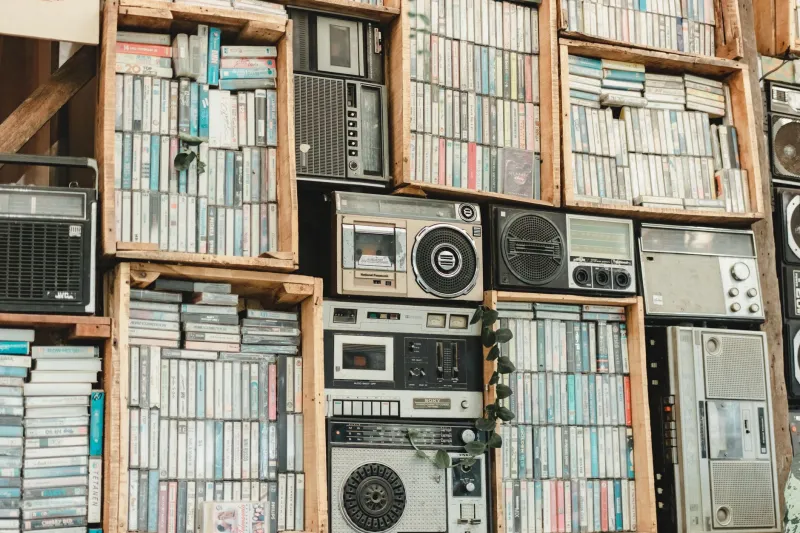
In Brooklyn, Detroit, Chicago, and LA, a parallel movement is happening in warehouse spaces — less overtly spiritual in its framing, but equally intentional in its rejection of the digital-first model. Here, the focus is on analog equipment: vinyl-only DJ sets, live modular synthesis, vintage drum machines, and sound systems built from scratch by audio obsessives who treat speaker design as a craft.
The analog commitment isn't just nostalgia. It's a philosophy about presence. Digital audio, these communities argue, is infinitely reproducible — you can stream it, screenshot it, clip it for TikTok. Analog sound, especially live analog sound, exists only in the room, only in the moment. It can't be extracted and redistributed. It belongs, completely, to the people who showed up.
"A vinyl record has physical memory," says Marcus, who DJs under the name Drumskin Ritual and plays regular sets at a rotating warehouse party series in Detroit. "The needle is actually touching the groove. That's not a metaphor — that's a material relationship between the music and the moment. When you put that in a room with a great sound system and a crowd that's ready to move, something happens that you can't replicate in a headset."
Marcus's sets typically run four to five hours. He doesn't take requests. He doesn't have a social media presence beyond a bare-bones Bandcamp page. His bookings come entirely through community word-of-mouth, and he prefers it that way.
Collective Consciousness on the Dance Floor
What both the psytrance collectives and the analog warehouse communities share is a vocabulary around collective consciousness — the idea that dance, done right, in the right conditions, with the right intention, produces something that transcends individual experience.
This isn't fringe mysticism. Ethnomusicologists and neuroscientists have been documenting the social bonding effects of synchronized movement and shared rhythm for decades. The experience of dancing in sync with strangers, of feeling your nervous system entrain to a shared beat, produces measurable neurochemical effects — oxytocin, endorphins, and something researchers describe as a temporary dissolution of the self-other boundary.
In other words: it gets you high. Collectively. Without a screen in sight.
For communities that have come to view mainstream culture as increasingly atomizing — everyone in their own algorithm bubble, their own curated feed, their own digital experience — the communal rave offers something genuinely countercultural. It insists on physical presence. It insists on shared risk and shared joy. It insists that some experiences cannot and should not be mediated.
"The metaverse version of this doesn't exist," says Ximena flatly. "You can't have a spiritual experience through an avatar. The body has to be there. The sweat has to be real. That's not a limitation — that's the whole point."
The Movement Grows
Despite — or maybe because of — its deliberate resistance to digital visibility, this movement is growing. Collectives are forming in cities and small towns across the US, connected by informal networks, shared values, and the occasional road trip to a particularly legendary event. Zines are circulating. DIY sound system building workshops are being organized. The knowledge is spreading person to person, the old-fashioned way.
None of it will trend on TikTok. None of it will show up in a Spotify playlist. And that, these communities would tell you, is exactly what makes it worth protecting.
Tune in. Drop out. And for the love of everything holy, leave your phone in the car.