Tape and Trust: Inside the Secret Cassette Networks Keeping America's Underground Music Alive
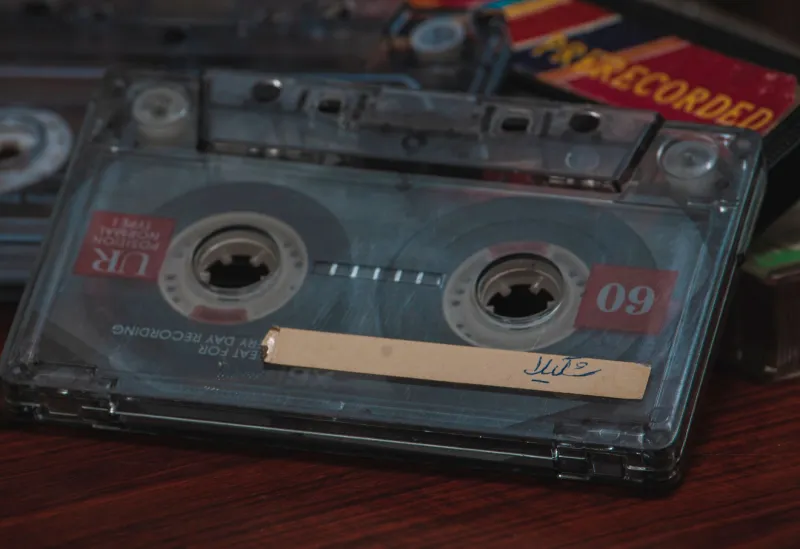
The envelope arrives with no return address. Inside: a hand-dubbed cassette wrapped in a photocopied insert, hand-numbered 47 of 75. On the label, written in ballpoint pen: For the right ears only. There's no streaming link. No QR code. No social media handle. Just a name, a location — somewhere in western Pennsylvania — and sixty minutes of the strangest, most alive music you've heard in years.
This is how it works. This is how it's always worked. And despite everything the music industry has done to convince you that physical media is a relic, these networks are not only surviving — they're thriving, deliberately and defiantly, in the spaces the algorithm can't reach.
The Geography of Tape
Cassette culture never died. It just got very, very quiet.
While major labels were busy rediscovering vinyl as a premium product and streaming services were gobbling up independent catalogs, a parallel universe of cassette-based underground music simply kept doing what it had always done: copying, mailing, trading, and listening. No press releases. No playlist pitching. No engagement metrics.
The communities doing this aren't concentrated in the places you'd expect. Sure, there are tape scenes in Brooklyn and Portland — but those tend to skew toward the aesthetic, the cassette-as-fashion-object crowd. The networks we're talking about are different. They're rooted in places like Youngstown, Ohio; Gary, Indiana; Bozeman, Montana; and the scattered small cities of Appalachia, where experimental music has always had to survive without institutional support.
"The rust belt has always had this weird creative energy," says Marcus Dray, who runs a small tape label called Corroded Signals out of a rented house in Erie, Pennsylvania. "There's nothing here in terms of industry infrastructure. No major venues, no A&R people, no tastemaker blogs covering us. So you either build your own thing or you don't make music at all. We built our own thing."
Corroded Signals has released over two hundred cassettes since 2011. Every single one has been duplicated on a stack of consumer-grade tape decks in Dray's spare bedroom, assembled by hand, and distributed entirely through postal mail and in-person trades at a rotating cast of informal gatherings — house shows, record swaps, the occasional library basement.
None of it has a digital presence. That's a choice, not a limitation.
The Postal Underground
The spine of these networks is the mail. Old-school, stamps-and-envelopes, USPS mail. Artists send tapes to people they've never met, based on recommendations from people they have. Collectors trade duplicates. Labels send out copies to a handwritten list of addresses maintained in actual notebooks.
It sounds inefficient because, by the logic of modern music distribution, it is. It also creates something that Spotify cannot: genuine scarcity, genuine intimacy, and a built-in filter for who actually cares.
"When someone goes to the trouble of mailing you something," says Renee Chalk, an artist and archivist based in Asheville, North Carolina, who has been trading tapes since the mid-nineties, "you know it matters to them. There's no algorithm deciding you might like it. A human being decided you specifically should hear this. That changes how you listen."
Chalk maintains a card file of over three hundred contacts she's built over thirty years of tape trading. She knows most of them only by their handwriting and their taste. Some she's never spoken to. "We have a relationship," she says, "that exists entirely in the music we've sent each other. I find that beautiful."
What's Actually on the Tapes
If you're picturing lo-fi indie pop or bedroom folk — think again. The music circulating through these networks tends to run toward the genuinely experimental: noise, drone, musique concrète, outsider electronics, field recordings assembled into something that barely qualifies as song. The kind of stuff that has no natural home on any streaming platform because it was never made with a streaming platform in mind.
Artists like the Youngstown-based project Dead Channel Swim make music designed specifically for tape playback — compositions that use the medium's hiss, speed fluctuation, and generational degradation as intentional sonic elements. "Every copy sounds a little different," says the project's sole member, who goes by the name Yost. "By the time a tape has been dubbed three or four times, it's got this texture that no digital file can replicate. The imperfection is the point."
This philosophy runs deep in cassette culture. Tape isn't just a delivery mechanism — it's an instrument, a collaborator, a medium that actively participates in the sound. Every dub introduces artifacts. Every playback adds wear. The music evolves as it circulates.
Staying Off the Grid
The decision to remain analog-only is, for most of these communities, explicitly political. Streaming platforms extract value from artists while concentrating it at the top. Algorithms determine what gets heard based on engagement data rather than artistic merit. The entire infrastructure of digital music distribution is built on surveillance capitalism, and participation in it — even at the underground level — involves a series of compromises that cassette culture has simply opted out of.
"I don't want Spotify knowing what music I listen to," says Dray. "I don't want some AI deciding what sounds like my stuff and serving it up to people as a recommendation. I want a stranger in Montana to get one of my tapes because their friend told them they'd lose their mind listening to it. That's the only recommendation engine I trust."
There's also something to be said for the durability of the format. Cassette tapes, properly stored, outlast hard drives. The physical object doesn't disappear when a platform shuts down or a licensing deal expires. The music in Chalk's archive exists outside of any corporate infrastructure, immune to the kind of digital erasure that has already swallowed enormous portions of early internet-era music.
A Network That Grows Sideways
These communities don't scale in the traditional sense. They grow sideways — slowly, through personal connections, one hand-addressed envelope at a time. A new person gets pulled in because they happened to be at the right house show, or because a friend passed along a tape with a note saying you need to hear this.
And then they're in. They start sending tapes. They get tapes back. They learn the names — the labels, the artists, the collectors — and gradually the network reveals itself, a web of relationships built entirely on shared taste and mutual trust.
It's everything the internet promised to be and never quite became. It's slower, weirder, and infinitely more human.
Somewhere in a house in Erie, Pennsylvania, a stack of tape decks is running. A new batch is almost ready. The envelopes are already addressed.
Your copy might be on its way.