Thirty Festivals, One Burnt-Out Brain: A Field Report From the DIY Circuit
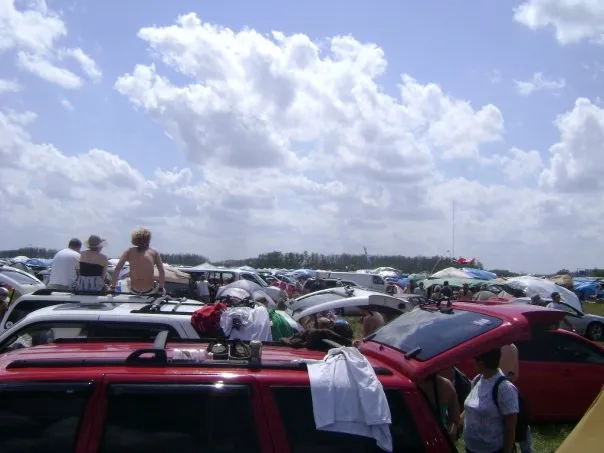
Photo: Ilikethismusic, CC BY-SA 4.0, via Wikimedia Commons
Somewhere around festival nineteen — a drone showcase in a Pennsylvania quarry, don't ask — I realized I couldn't remember the name of the town I was sleeping in. I could remember the name of the town I'd be sleeping in the following weekend, because I'd memorized the spreadsheet. That's when it hit me: I wasn't attending festivals anymore. I was working them.
This is my report from the front lines of the DIY festival boom, written from a couch I barely recognize.
The Circuit Is Real and It Is Exhausting
Between May and September, I hit thirty small festivals. Not Bonnaroo, not Coachella — I mean the 100-to-800-person affairs that happen on campgrounds, desert lots, converted farms, and land owned by somebody's tolerant relative. Experimental electronic gatherings in the Northeast woods. Psychedelic rock weekenders in the Southwest. A noise fest in a Texas field where the porta-john situation remains, to this day, a trauma I'm processing.
The pattern is always the same. You drive four to ten hours. You pitch a tent in the dark. You wake up to someone's ambient set drifting over the treeline at 7 a.m. because ambient at dawn is a religion out here. You see eleven bands, make four friends, buy a tape from an artist whose set destroyed you, and drive home Sunday with a sunburn and a car that smells like campfire.
Then you do it again.
What the Boom Gets Right
Here's the thing the burnout discourse misses: this circuit is the only infrastructure underground music has. Streaming pays nothing. Venues are dying. The festivals are where artists actually get paid, where fans actually meet each other, where scenes stop being Discord servers and start being communities.
I watched a teenage modular artist play her first out-of-state set to forty people in a Wisconsin field. By August, those same forty people were showing up to her sets in three other states. That's not a festival. That's a nervous system.
The smaller events also take risks no ticketed corporate fest would touch. Sets at sunrise. Sets at 3 a.m. A guy performing with a homemade instrument made from a radiometer and a contact mic. Nobody's A&R-ing this. Nobody's optimizing it. It's music for its own people, at its own pace.
What the Boom Gets Wrong
But let's be honest about the cost, because I paid it and so did everyone around me.
The circuit runs on unpaid and underpaid labor. The people booking these fests are often artists themselves, losing money on them, running on four hours of sleep and vibes. The super-fans — the ones who go to ten-plus a summer — are the connective tissue of the whole scene, and the scene has no mechanism to notice when that tissue tears. I watched two friends flame out hard by August: one from financial strain, one from the slower, quieter burnout of never being home.
There's also a sameness creeping in. When you see thirty lineups, you start noticing that thirty lineups feature a lot of the same fifty artists. The circuit can be a ladder or a loop, depending on who's booking.
How to Do It Without Dying
Hard-won advice, offered freely:
Cap yourself at two a month. The spreadsheet lies. Your body doesn't.
Pick one weekend to be a civilian. Go to a fest, see three acts, nap in the grass, leave early. Not every event needs to be maxed.
Spend money at the merch table. The artists are the whole thing. Ten dollars for a tape is the cheapest patronage in the history of art.
Volunteer at least once. It rebalances the transaction. You'll never look at a fest organizer the same way again.
Verdict: Community or Machine?
Both. Honestly, both. The DIY festival circuit is the most vital thing happening in American underground music and it is actively chewing through the people who love it most. The fix isn't fewer festivals. It's more rest, more mutual aid, more bookers paying themselves, more of us treating the scene like a garden instead of a mine.
I'm going to fewer next year. Four, maybe five. The good ones.
See you in the field. I'll be the one napping through the 3 a.m. harsh noise set. No regrets. Okay, some regrets.