One Take, Forever: The Artists Making Music That Can Never Be Copied
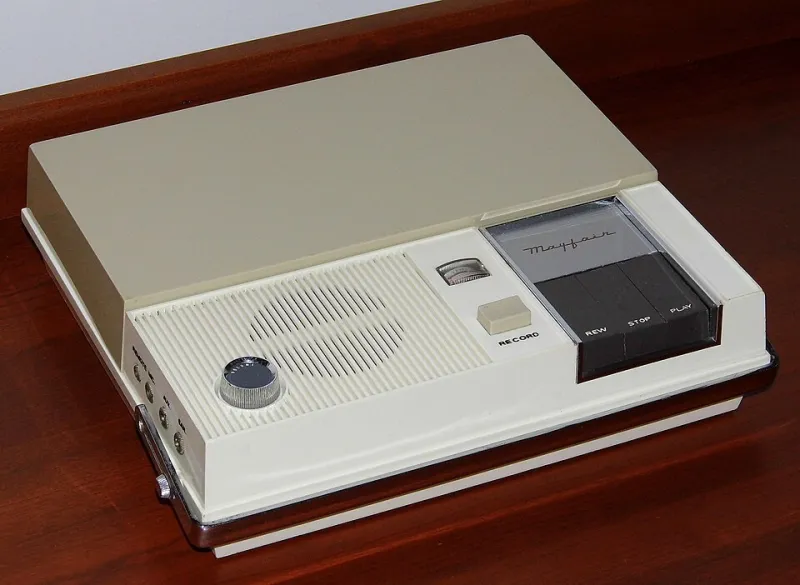
Photo: Joe Haupt from USA, CC BY-SA 2.0, via Wikimedia Commons
There's a tape reel sitting in a climate-controlled closet in Albuquerque, New Mexico, that contains the only recording of an album that will never be heard by most people who might want to hear it. It cannot be streamed. It cannot be ripped to a hard drive. It exists in one place, on one spool of two-inch magnetic tape, and when that tape degrades — which it will, eventually — the music on it will be gone.
Its creator, a multi-instrumentalist and composer named Rue Cassidy, made this choice deliberately. She recorded the album over three days in a converted garage, straight to a vintage Ampex reel-to-reel, with no digital interface in the signal chain and no backup copy of any kind. She's played the tape for perhaps thirty people. She has no plans to play it for more.
"I wanted to make something that couldn't be everywhere," she says. "Everything is everywhere now. I needed to know what it felt like to make something that was just here."
The Refusal
Cassidy is part of a loose, deliberately unorganized movement of experimental musicians across the United States who are making a philosophical commitment to analog-only, non-duplicated recordings. They are not Luddites, exactly — many of them use digital tools in other parts of their lives. But their music, specifically, stays off the grid. No files. No WAVs. No cloud backups. No streaming deals. No algorithmic discovery.
The movement doesn't have a name or a manifesto, which feels appropriate. Its participants communicate through zines, letters, and occasional gatherings rather than Discord servers or social media. The irony of interviewing them for a website is not lost on anyone involved.
"You putting this on the internet is kind of funny," admits Cassidy, not unkindly. "But talking about a thing and doing the thing are different. The tape stays in the closet."
What's driving this? It's partly aesthetic — analog tape has warmth, depth, and a particular kind of noise floor that many producers find irreplaceable. But the artists in this community are quick to say that sound quality is secondary to something harder to articulate: the meaning that comes from finitude.
What Scarcity Does to Music
In 2025, any song recorded to a digital file can, theoretically, be copied an infinite number of times. It can be streamed by millions of people simultaneously. It can outlast its creator by centuries stored on servers that will be maintained long after anyone remembers who made the music. This is usually presented as a triumph — art liberated from physical decay, democratically available to anyone with an internet connection.
The analog resistance crowd looks at that picture and sees something else: music that has no relationship with the listener, no sense of occasion, no weight. Music that is everywhere is, in a sense, nowhere.
"When something can be heard by anyone at any time, it changes what it means to hear it," says Declan Marsh, a tape-based composer based in rural Vermont who releases his work in editions of ten hand-dubbed cassettes, recorded in real time with no editing. "There's no reason to pay attention. You can always come back. You can always skip ahead. The music becomes furniture."
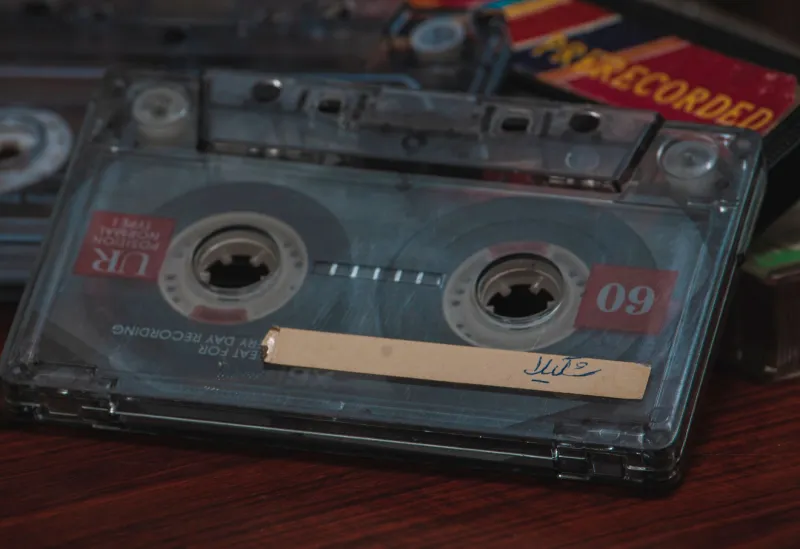
Marsh's cassettes — hand-labeled, imperfect, each one slightly different due to the analog dubbing process — sell out within hours of announcement, passed between listeners through a network built on trust and physical mail. When a cassette wears out, that copy of the music is gone. There's no replacement.
This is, he argues, how music was always meant to work. A performance is a moment. A recording is a document of a moment. Both are meant to be finite.
The Preservation Problem
The archivists and music historians who study this stuff are not entirely comfortable with what these artists are doing. There's a real tension between the philosophy of impermanence and the cultural value of preservation — particularly when it comes to music from communities that have already been systematically underdocumented.
"I understand what they're going for," says one archivist at a regional university who asked not to be named, "but there's a history of experimental and underground music being lost, and a lot of that loss wasn't chosen. It was poverty, racism, neglect. Choosing to let your work disappear is a very different thing when you're doing it from a position of privilege."
It's a fair critique, and the artists engaging with it seriously tend to acknowledge the contradiction. Cassidy says she thinks about it. "I'm a white woman with a stable income and a climate-controlled closet," she says. "I can afford to make this choice. Not everyone can, and that matters."
Others in the community are less reflective, more romantic about the whole thing — which is where the philosophy starts to curdle slightly into affectation. There's a fine line between meaningful impermanence and aesthetic cosplay, and not everyone walks it cleanly.
What the Listener Gets
For the people who do get to hear this music — in person, or through one of those hand-dubbed tapes — the experience is described in unusually intense terms. There's a sense of occasion. A sense that something is at stake. You can't rewind the moment. You can't screenshot it. You can't share it.
"I played Rue's tape for a friend and we both just sat there afterward," says one listener, a musician himself, who asked to be identified only as T. "We didn't talk for a while. When's the last time music did that to you? When's the last time you felt like you were holding something that could be lost?"
That feeling — the weight of the irreplaceable — is what these artists are manufacturing. They're not anti-technology, not even really anti-streaming. They're pro-consequence. They want their music to mean something because it can end.
In a world where every song ever recorded is theoretically available to anyone with a smartphone, making something that genuinely cannot be found is its own kind of radical act. The tape in Albuquerque keeps spinning, slowly, through the heads of its one reel-to-reel player. Somewhere in those magnetic particles is a record that will, one day, be gone.
Until then, it's the most exclusive music in the world. And it sounds like it.