Frequencies That Rewire You: Meet the Sound Artists Building Highs Without a Single Pill
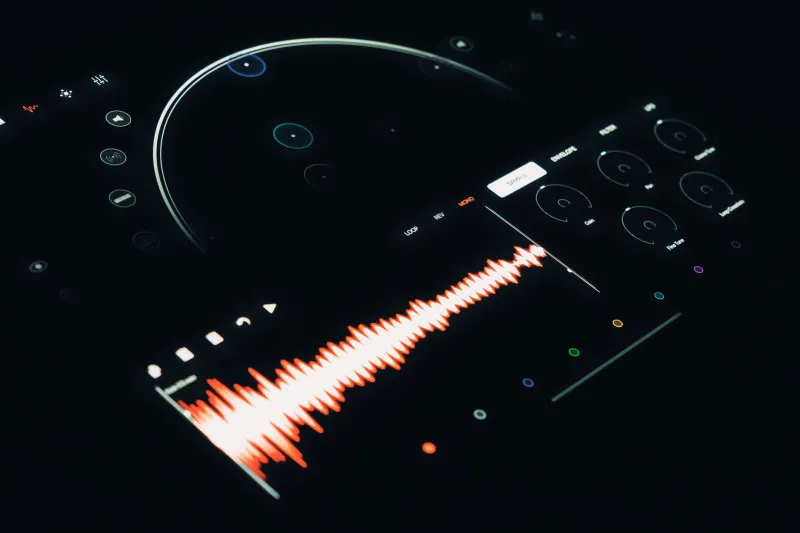
Somewhere in a converted garage in Albuquerque, a guy named Desmond is doing something that probably should require a waiver. He's got two subwoofers pointed at a salvaged recliner, a laptop running custom Max/MSP patches, and a pair of studio headphones hanging on a hook by the door like a sign that reads leave your baseline reality here. His latest project has no title yet. It doesn't need one. The people who've sat in that chair for twenty minutes already know what it does to them.
"The first person who tried it just started laughing," Desmond says, not looking up from his screen. "Then crying. Then they said they saw their grandmother, who's been dead for eleven years. I didn't touch a single drug in that room. That was all frequency."
Welcome to the psychoacoustic underground—a loose, nationwide network of sound designers, producers, and experimental artists who are quietly, deliberately engineering audio that messes with your head on a neurological level. Not metaphorically. Literally.
What Is Psychoacoustics, Actually?
The term sounds clinical, and the science behind it is real enough to make neuroscientists pay attention. Psychoacoustics is the study of how the brain perceives sound—not just what we hear, but how audio frequencies interact with our nervous systems, our emotional states, and our cognitive processing.
Binaural beats are the most widely known entry point. Play a 200 Hz tone in one ear and a 210 Hz tone in the other, and your brain generates a third tone at the difference frequency—10 Hz in this case, which sits in the alpha wave range associated with relaxed, meditative states. Shift that differential to the delta range and you can theoretically nudge someone toward deep sleep. Push into the gamma range and attention sharpens. The brain, essentially, can be tuned like an instrument.
But the artists working in this space will tell you that binaural beats are just the front door. The real territory goes much deeper.
The Basement Architects
Out in Portland, a duo called Silt & Nerve has been releasing what they describe as "functional audio environments"—hour-long compositions that layer binaural entrainment with specific harmonic intervals, field recordings, and what they call "infrasonic underlayers" that hover just below the threshold of conscious hearing. Their Bandcamp page gets a few hundred plays a month. Their private listening sessions, held in a rented rehearsal space, have a six-week waitlist.
"We're not trying to replicate a drug experience," says the member who goes by Mara. "We're trying to access the same neurological spaces that substances open up, but through a completely different door. Sound has been doing this for thousands of years. Tibetan singing bowls. Drumming circles. The bass frequencies in a cathedral. None of that is new. We're just being more intentional about it."
Their partner, who records under the name Fell, is more blunt: "We're building tools. Whether they're therapeutic or recreational is kind of up to whoever sits down with them."
That ambiguity is part of what makes this scene so fascinating—and so slippery.
The Ethics of Sonic Mind-Alteration
Here's where things get genuinely complicated. If you engineer an audio experience that reliably produces altered states of consciousness, you're doing something that exists in a legal and ethical no-man's-land that nobody has really mapped yet.
Dr. Nina Rao, a cognitive neuroscientist at UC San Diego who has consulted informally with several artists in this space, puts it plainly: "The neurological effects of sustained binaural entrainment combined with specific harmonic structures are real and measurable. We're not talking about placebo. We're talking about demonstrable shifts in brainwave activity. The question of consent and context becomes very important very quickly."
Most of the artists working in this space are thoughtful about this. Desmond posts detailed documentation about what his sessions involve before anyone sits down. Silt & Nerve screen participants for epilepsy and certain psychiatric conditions. A Brooklyn-based producer named Theo, who releases under the alias Chlorophyll Static, includes written disclosures with every digital download.
"I take it seriously," Theo says. "This isn't ambient music you put on while you do dishes. If you engage with it the way it's designed to be engaged with, something real is going to happen to you. People deserve to know that going in."
But not everyone in the scene is so careful, and that's worth acknowledging. There are producers releasing binaural content on YouTube with zero context, no warnings, and titles designed to game search algorithms. The underground has its cowboys, same as any frontier.
Post-Substance and Wide Awake
What makes this moment feel different from, say, the binaural beat novelty tracks that floated around the internet in the 2000s is the cultural context surrounding it. A significant chunk of the audience finding this work is young, sober-curious, or actively in recovery—people who want to access non-ordinary states of consciousness without the legal risk, the physical toll, or the unpredictability that comes with substances.
"I haven't tripped in four years," says Jamie, a 26-year-old in Chicago who found Silt & Nerve through a Reddit thread. "I don't miss it, honestly. But I do miss that feeling of the walls going soft, you know? Of your thoughts kind of... loosening. This gets me there. Not all the way, but far enough."
That sentiment tracks with broader cultural shifts. Sober bars are opening in major cities. Mocktail culture is everywhere. And meanwhile, in basements and rehearsal spaces and converted garages, a small army of sound artists is building the infrastructure for a kind of consciousness exploration that doesn't require anything except a good pair of headphones and the willingness to let go.
The Gear Behind the Altered State
For what it's worth, you don't need a fortune to start exploring this territory. Most of the producers in this space are working with surprisingly modest setups. Max/MSP and SuperCollider are popular for custom frequency generation. Ableton with the right plugins handles a lot of the harmonic layering. A quality pair of closed-back headphones—the kind that actually isolate the two channels properly—matters more than almost anything else in your chain.
Subwoofers, for the producers working with infrasonic elements, are where costs can climb. But Desmond built his rig from salvaged gear and a lot of patience. "The tools aren't the point," he says. "The intention is the point. You have to actually understand what you're trying to do to the nervous system before you start patching anything together."
The Trip Is the Point
At the end of the day, what the psychoacoustic underground is doing is ancient work dressed in new clothes. Humans have been using sound to alter consciousness since before we had language to describe the experience. The drum circle, the chant, the cathedral pipe organ rattling your ribcage—these are all technologies for moving the mind somewhere it doesn't ordinarily go.
What's new is the precision. The intentionality. The willingness to say out loud: yes, we are engineering this to change your brain state, and we think that's worth doing carefully, ethically, and with full transparency.
Desmond's next session is in two weeks. The waitlist is already full. The recliner is waiting. The frequencies are loaded.
You probably don't need a waiver. But you might want to clear your afternoon.