Into the Void: Sound Artists Who Compose in Total Darkness and Absolute Silence
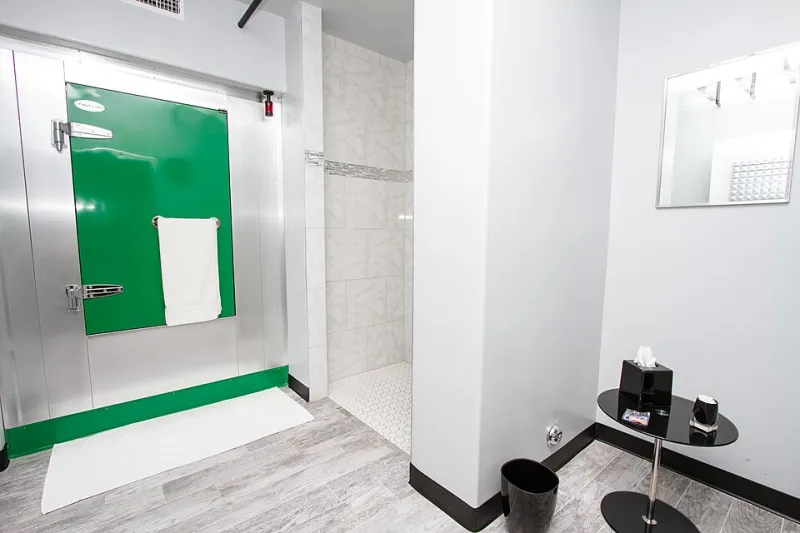
Photo: FloatLab, CC BY-SA 4.0, via Wikimedia Commons
The float tank smells faintly of salt and something older, something mineral. You close the lid. The darkness isn't just the absence of light — it's a presence, dense and specific. Then the sound starts. Or maybe it was always there and you just couldn't hear it until everything else disappeared.
That's the environment Naomi Skeir composes in. The Brooklyn-based sound artist has spent the last four years building an album inside a sensory deprivation tank, recording herself playing small percussion instruments, singing, and processing found sounds — all while floating in ten inches of body-temperature saltwater in complete blackness. The results, she says, sound like nothing she's ever made in a conventional studio.
"When you take away sight, your ears get desperate," she explains. "They start reaching for things. The music becomes enormous, even when it's technically very quiet."
The Architecture of Absence
Anechoic chambers — rooms engineered to absorb nearly all sound reflection — are the other extreme. Where sensory deprivation tanks eliminate external input, anechoic chambers reveal the sounds your body generates constantly: blood moving, joints shifting, the low thrum of your own nervous system. Several universities and audio research facilities across the US have these rooms, and a small number of underground musicians have managed to get access to them for recording sessions.
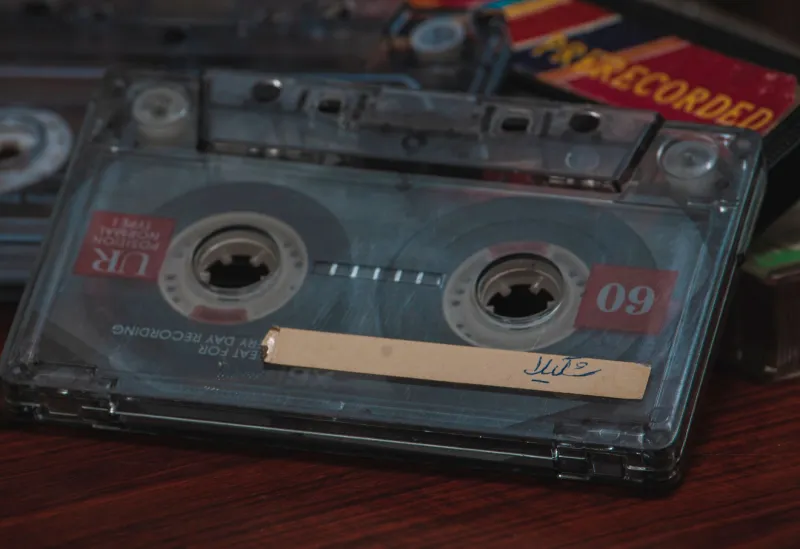
Minneapolis composer Dario Fenn spent three sessions in an anechoic chamber at a regional university, with permission granted through a contact in the acoustics department. What he recorded there — breath, the creak of his own weight shifting, extremely quiet guitar harmonics — forms the foundation of a forty-minute piece he's released on a hand-dubbed cassette edition of forty copies.
"In a normal room, you're always fighting the room," Fenn says. "The room has opinions. In an anechoic chamber, the room has nothing to say. It's just you and whatever you're making. It's terrifying and it's perfect."
The terror Fenn describes is well documented. Most people can't tolerate anechoic chambers for more than a few minutes. The absence of ambient sound becomes disorienting quickly — the brain, accustomed to using reflected sound to orient itself spatially, starts generating its own input. Tinnitus spikes. Hallucinations are reported. John Cage famously visited Harvard's anechoic chamber in 1951 and came out having heard two sounds — his nervous system and his blood circulating — which led directly to his composition of 4'33".
For the artists working in this space now, Cage is both ancestor and shadow. They're aware of the lineage and mostly uninterested in explaining themselves through it.
Bypassing the Visual Cortex
The scientific premise underlying this work is straightforward even if the artistic implications are strange. Human perception is massively biased toward vision — roughly thirty percent of the cortex is involved in processing visual information, compared to eight percent for touch and three percent for hearing. When you remove visual input, those neural resources don't go idle. They reassign.
Studies on blind individuals show that the visual cortex can be recruited for auditory processing, producing enhanced sensitivity to sound localization, pitch, and texture. Sighted people in total darkness experience a temporary version of this — the auditory system expands into the neural space vision normally occupies.
"Your ears are capable of so much more than we let them do," says Skeir. "We're just constantly overriding them with our eyes. Take the eyes out of the equation and suddenly sound has a different weight to it. A different dimension."
This is the experience these artists are engineering — not just for themselves while composing, but for listeners. Several in this community have developed listening events built around total darkness: rooms where the lights go completely out before the music starts and don't come back on until it ends. No phones. No exit lights. Nothing.
Performing the Invisible
In Seattle, a collective called Null Room has been running dark listening sessions in a converted warehouse space for the past two years. Attendance is capped at twenty people. Participants are given basic safety orientation, then guided to cushions on the floor. The lights go out. The music — live, in the room, performed by artists the audience cannot see — begins.
"People always say the same thing afterward," says the collective's organizer, who goes by the name Crestfall. "They say the music felt like it was coming from inside their own head. Which is kind of the whole point."
The performers themselves work blind, navigating their instruments and each other by sound and muscle memory alone. Crestfall describes it as a practice — something that requires months of preparation before it becomes natural. "You have to learn to trust your ears the way a sighted person trusts their eyes. Most of us have never done that."
For audiences conditioned to watch music — to track the performer's hands, read their expression, get visual cues about when something is supposed to be emotional — the experience of hearing without seeing can feel initially uncomfortable, then gradually liberating. Without a performer to look at, there's nothing to do but listen.
The Record That Doesn't Look Like Anything
There's a packaging problem with this music. How do you design an album cover for something that explicitly rejects the visual? Several artists in this space have responded by releasing their work with completely black covers, no text, no imagery. Others have gone further — releasing with no physical packaging at all, just a cassette shell with a handwritten catalog number.
Skeir's float tank recordings, when they're finally released, will come in a black envelope. No title on the outside. Instructions inside describe a recommended listening protocol: alone, headphones, eyes covered, horizontal. The music is designed to be received in conditions that approximate the ones in which it was made.
"I want people to have the same experience I had making it," she says. "Not to watch something. Not to consume something. To disappear into it."
In a culture that increasingly treats music as backdrop — something to have on while doing other things, something the algorithm selects while you scroll — these artists are building work that refuses to be ignored. It demands the whole body. It asks you to stop looking.
Close your eyes. Turn it up. Then turn everything else off.