On Hold for the Infinite: The Sound Designers Slipping Psychedelia Into Your Dentist's Waiting Room
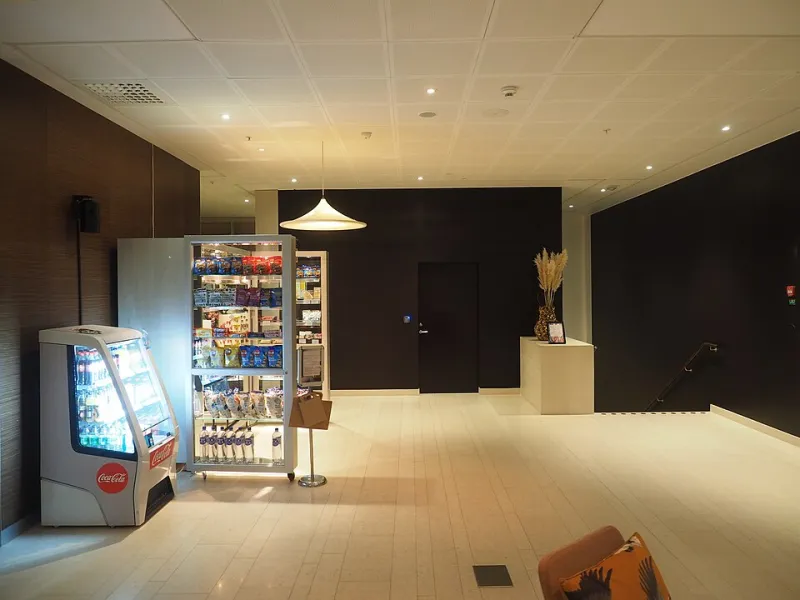
Photo: JIP, CC BY-SA 4.0, via Wikimedia Commons
The average American will spend roughly 43 hours of their life on hold. Most of that time is scored by a stock library track: tinny pan flutes, a saxophone that has never known joy, music engineered by committee to be aggressively ignorable.
A small group of composers would like to change what's playing. Not to make it less boring — to make it weirder.
The Quiet Pipeline Into Corporate Ears
Meet the background-music economy. Small sound design shops and boutique licensing libraries sell mood music to the places you stop noticing: hotel lobbies, grocery chains, call centers, dental offices, that one airport terminal you'll never remember the name of. The clients want "calm," "uplifting," "neutral." The contracts pay modestly but reliably — a few hundred to a few thousand dollars per placement, recurring monthly.
And inside that machine, a handful of ambient and psychedelic composers have found something remarkable: the least policed listening environment in America. Nobody skips hold music. Nobody shazams it. Nobody's algorithm is watching. You have a captive audience of millions, wearing headsets and waiting for a mortgage specialist, with absolutely no idea what's about to happen to them.
One composer — he licenses through a shell name and asked not to be identified, citing his client roster — describes his method: "I write actual deep-listening pieces. Long drones, binaural beating, slowly evolving harmonic fields. Then I make a 'safe' edit for the client demo, and a slightly less safe version tends to end up in the final rotation. The difference is subtle. The beating frequencies between the left and right channel are doing the real work. People get off hold feeling weirdly okay. Better than okay. They just don't know why."
Is This Ethical? Everyone Disagrees
The community is split. Critics within the ambient scene call it sonic trespassing — dosing an unsuspecting public through their earbuds. Defenders point out that corporate Muzak has been manipulating mood for a century; at least the psychedelic version makes people feel good instead of compliant.
"The mall playlist exists to make you linger and spend," argues one label owner who sells both mainstream background packs and, quietly, experimental ones. "If my track makes a guy waiting for his oil change feel a moment of genuine peace, that's a better outcome than the pan flutes. I'm not brainwashing anyone. I'm de-brainwashing them at 30% volume."
The artists who do it openly tend to treat it as conceptual practice. One Los Angeles sound artist placed a genuinely difficult 22-minute drone piece in a regional bank's hold queue and reported that complaint volume actually went down. "People stopped being angry about waiting," she says. "They were just... elsewhere."
Can You Rewire a Nation Through Hold Music?
Probably not. But the dream persists, and there's a flicker of science under it. Repetitive, slowly evolving tones genuinely do entrain brainwaves — it's the same mechanism behind binaural beat research and, honestly, behind church organs. A lobby is just a very quiet congregation that didn't buy a ticket.
What's undeniably true is the reach. A single placement in a national retail chain's store playlist exposes a composition to more listeners in a week than most experimental artists achieve in a career. The underground has spent decades begging for ears. The background music industry hands them millions, pre-attentive, already wearing headphones.
The composers doing this aren't getting rich. They're getting played — everywhere, invisibly, forever. Somewhere in a Cleveland call center, a man on hold for the third time today is being slowly massaged by a drone recorded in a desert chapel, and he will never know its name.
That, the smugglers say, is the art. The waiting room is the venue. You've already been to the show.