God's Own Reverb Tank: Why Underground Producers Are Buying Abandoned Churches
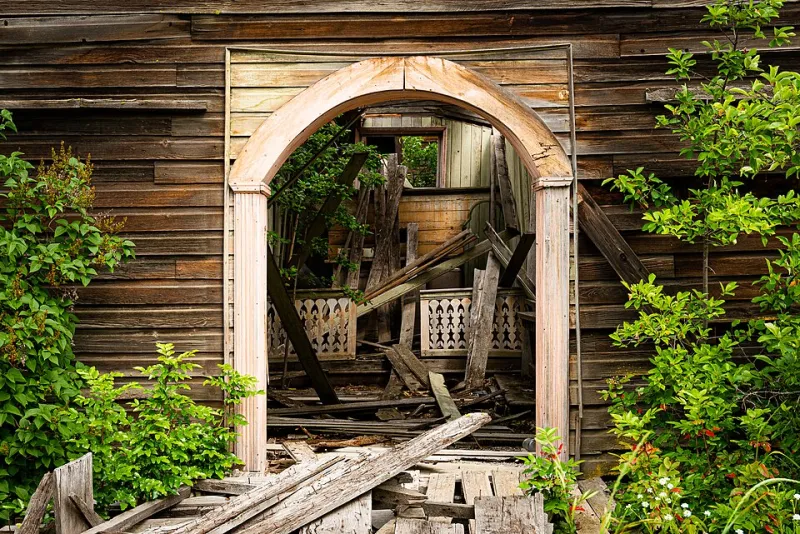
Photo: Darren Kirby, CC BY-SA 2.0, via Wikimedia Commons
There's a moment, somewhere around the fourth hour of patching, when the modular rig and the pipe organ start talking to each other. The organist holds a low C. The synth answers with a detuned drone two cents sharp. And the room — the room — swallows both and hands back something that sounds like the building itself is singing.
That's the whole pitch. That's why a handful of musicians and producers across the Rust Belt are spending their savings on deconsecrated churches instead of studio buildouts.
The Real Estate Nobody Wanted
America has a church surplus. Congregations shrink, merge, or dissolve, and the buildings — often gorgeous, often structurally sound, often sitting on land the diocese wants off its books — go up for sale at prices that would barely cover a down payment on a Brooklyn apartment. Detroit. Buffalo. Youngstown. Toledo. The list of cities with empty houses of worship runs long.
Most buyers want to flip them into condos or breweries. A smaller, stranger group wants the acoustics.
"You can't buy this reverb," says one producer who, after a decade of convolution plugins and plate simulations, pooled money with three friends to buy a shuttered Methodist church in upstate New York. "Every impulse response library sounds like a room. This sounds like a place. There's a difference, and your ears know it even if your brain doesn't."
What a Church Actually Does to Sound
The physics are simple and unforgiving. Gothic and neo-Gothic sanctuaries were built to carry unamplified voices and organ pipes to the back pews. Stone and plaster reflect. High ceilings delay. The result is a natural reverberation time that can stretch past four or five seconds — long enough to turn a single note into a chord, a chord into a wash.
For ambient and psychedelic producers, that's not a problem to be solved. It's the instrument.
The trick is learning to play with it instead of against it. Fast tempos turn to mud. Percussive material smears. So the artists working in these spaces adapt: drones, slow harmonic movement, sparse percussion, long silences left deliberately empty so the room can finish the phrase. Some describe it as collaborating with the architecture. One engineer we spoke to called it "mixing for God's ears."
Congregation of Two
What's emerging isn't quite a studio model and not quite a commune. It's something in between — artist collectives that live or work in the space, host occasional performances, and rent recording time to touring experimental acts who want a taste of the halo effect.
The pipe organs are a recurring character in these stories. Restoring one costs real money, and not every collective can swing it. But when it works, it works: the organ was literally designed for the room, voiced to its specific acoustics by a builder who never imagined a Eurorack case would someday sit in the choir loft.
There's a theological irony nobody ignores. Buildings built for one kind of transcendence now hosting another. Some of the buyers are religious. Most aren't. All of them, when pressed, admit there's something in the air that isn't just humidity.
The Practical Realities
It's not all incense and drones. Heating a sanctuary costs a fortune. Zoning boards have opinions about noise — though a building designed to project organ music outward is, inconveniently, very good at projecting everything outward. Insurance on historic structures is its own special circle of paperwork.
And then there's the solitude. These churches sit in towns where the nearest noise show might be ninety minutes away. The artists who thrive in them describe a feedback loop: the isolation pushes the music inward and stranger, and the room pulls it back out bigger than they made it.
Why It Matters
Every era of recorded music has had its signature space. Motown had the snake pit. Abbey Road had its stairwell. The 2020s underground might be remembered for the sanctuary — for a scene broke enough to buy what nobody wanted and weird enough to know exactly what to do with it.
Turn on. Tune in. And if you hear a drone coming from the old church on the corner, don't be alarmed. That's just the building, remembering how to sing.