Five Bucks at the Door: Your Field Guide to Not Dying at Your First Noise Show
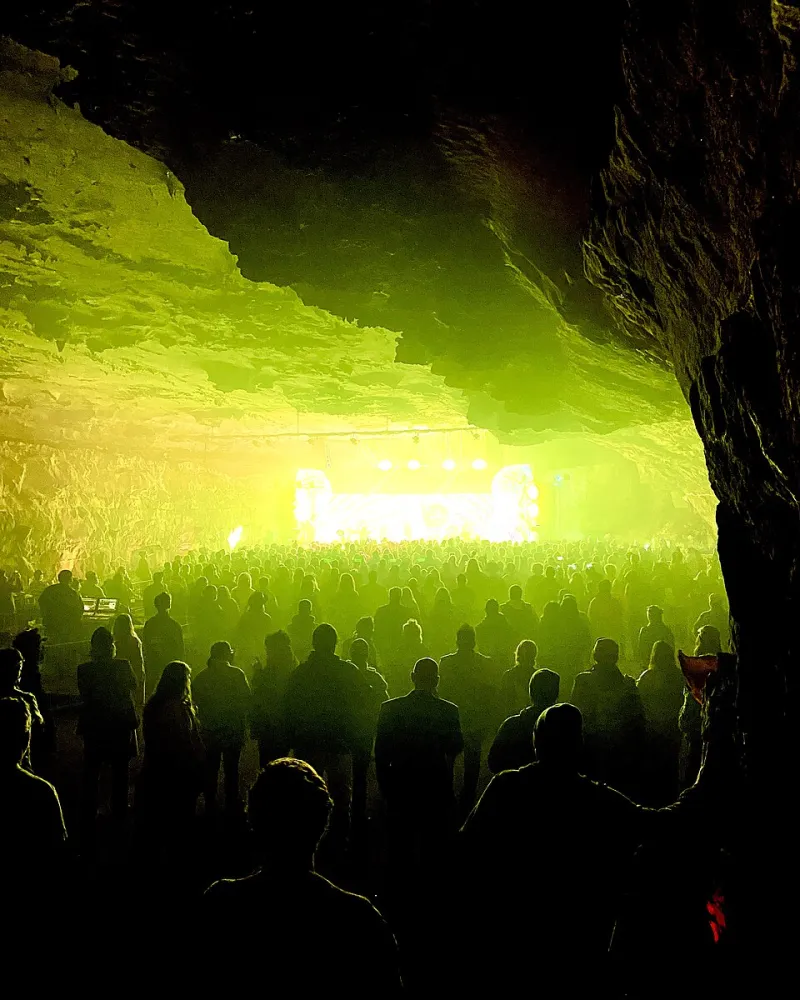
Photo: JourneyMap, CC BY-SA 4.0, via Wikimedia Commons
Everybody remembers their first noise show wrong. They remember the volume, the guy headbanging to a contact mic on a spring, the moment they wondered if they were allowed to leave. What they forget is the door person who took their five dollars, said "hey, welcome," and meant it.
This guide exists because the experimental underground is far easier to enter than its reputation suggests — and because every city's scene is one friendly door person away from being yours.
The Universal Rules (Memorize These First)
Before the city list, the code of conduct. This applies everywhere.
Cash. Venues are often living rooms, warehouses, or back-of-gallery spaces. Venmo to a stranger's handle is a coin flip. Bring small bills.
Buy something. A tape, a zine, a CD-R in a hand-stamped sleeve. Five to ten dollars keeps the ecosystem breathing and gives you a conversation starter with the artist, who is probably standing right there because there is no green room because the green room is a kitchen.
During the set, be quiet. This isn't a bar show. The quiet parts are the loud parts. Chatter during a drone piece is the scene's one true cardinal sin.
Applaud between pieces, not during. Sets are often one continuous piece. If you're unsure, follow the people who look like they've done this before.
Nobody is cooler than you. The scariest-looking person in a battle jacket is usually thrilled a newcomer showed up. Say hi.
Oakland / Bay Area: The Basement Kingdom
The Bay's noise scene lives in basements, project spaces, and gallery back rooms from Oakland to the Mission. Door runs $5–$15, all-ages more often than not. Look for flyers at record shops — the physical flyer is still the primary broadcast medium here. Etiquette bonus: many spaces are also someone's home. Don't wander past the beaded curtain.
Chicago: Loft Country
Chicago's experimental scene orbits lofts and converted industrial spaces — Pilsen, Bridgeport, the occasional printable address on the South Side. The city's deep experimental lineage (you know the one) means audiences skew attentive and genre-fluid: drone one night, free jazz the next, a synthesizer orchestra the night after. $8–$15 covers are typical, and the afterparty is usually the same room with the lights on.
New York: Smaller Than You've Heard
Yes, Manhattan is a museum. That's why the action is in Bushwick basements, Ridgewood project spaces, and a rotating cast of Chinatown galleries. Doors skew higher ($10–$20) because rent, but the density is unmatched — you can catch a noise set in Brooklyn and a modular showcase in Queens on the same night. Do not treat the artist's pedalboard as a bar table. People have tried. People have paid.
Detroit / Cleveland / Pittsburgh: The Rust Belt Renaissance
The best value in American experimental music. Warehouse spaces, church annexes, and art collective storefronts where $5 still means $5. Scenes are small enough that newcomers get adopted by week two. If you're an artist, these cities are where you can actually get a slot without three years of networking.
Portland, Seattle, Austin, New Orleans: The Distributed West and South
Portland's scene hides in house venues and a legendary network of all-ages spaces. Seattle runs on co-ops and gallery nights. Austin's experimental scene lives in the shadow of its own mainstream — look past Sixth Street, way past. New Orleans pairs noise with a voodoo of its own; expect horns where you expected pedals.
How to Not Be the Weird One (You Already Failed, It's Fine)
You will be the weird one. Everyone was. The person who now books the biggest loft show in Chicago once asked, audibly, "when does the band come on" during a solo set of amplified cactus recordings. The scene forgives everything except talking during the quiet part and not tipping the door person.
Show up. Pay the five. Close your eyes. Let the sound do the thing it came to do.
That's it. That's the whole initiation. Welcome to the circuit — your first tape purchase is waiting.