Vintage Voltage: The Obsessives Dragging Forgotten Polyphonic Synths Back From the Dead
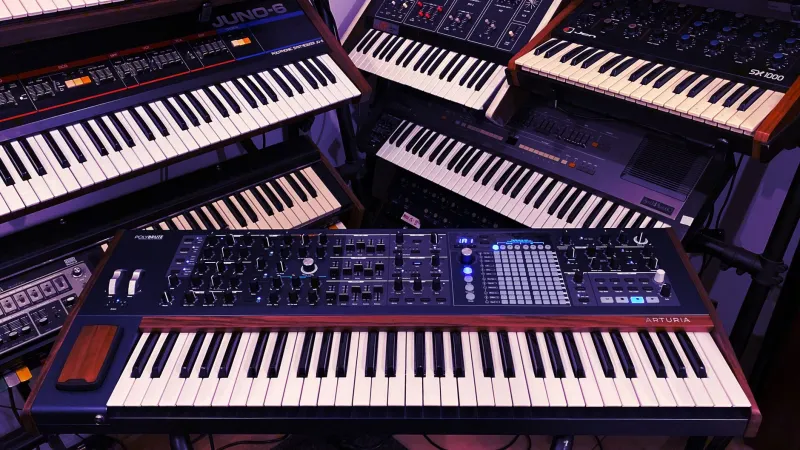
There's a particular smell that veteran gear hunters know well — musty carpet, old capacitor fluid, and the faint ghost of cigarette smoke baked into plastic keys over decades. It hits you the moment you pop open a storage unit or crack the lid on a thrift store find. And if you're lucky, underneath that smell is a polyphonic synthesizer from the late 1970s that nobody has touched since Reagan was in office.
These machines — dusty, half-functional, and frequently missing keys — have become the holy relics of the American underground music scene. Not because they're perfect. Because they're absolutely not.
What Got Left Behind
The late '70s and early '80s were a strange, fertile era for keyboard technology. Manufacturers like Oberheim, Sequential Circuits, Roland, and a dozen smaller outfits were all racing to crack polyphony — the ability to play multiple notes simultaneously — at a price point real musicians could afford. The results were extraordinary and deeply weird. Instruments like the Oberheim OB-X, the Sequential Circuits Prophet-5, the Roland Juno-60, and the more obscure Crumar Performer hit the market and promptly got used, abused, and eventually discarded when digital synths showed up and made everything "cleaner."
By the mid-'80s, FM synthesis and early samplers had made analog polyphony feel old-fashioned. These boards got shoved into closets, sold at yard sales for thirty bucks, or simply left to oxidize in storage units across the country. For a long time, nobody cared.
That indifference didn't last.
The Resurrection Economy
Ask Marcus Delray — a producer and self-described "keyboard archaeologist" based out of Detroit — how he got started, and he'll tell you about a Korg Poly-61 he found at an estate sale in 2017 for forty dollars. It was missing three keys, the pitch wheel was frozen, and the battery had long since leaked into the voice board.
"I didn't even know what it was when I bought it," he admits. "I just knew it looked cool and it was cheap enough that I couldn't lose."
After two months of YouTube tutorials, forum deep-dives, and a lot of desoldering, Delray got it running — sort of. The voice allocation was still glitchy, meaning chords would randomly drop notes or sustain when they shouldn't. He recorded with it anyway. The results ended up as the foundation of an ambient tape release that got passed around the Detroit underground like contraband.
"People kept asking what synth I used," he says. "When I told them it was a broken Poly-61 I bought at an estate sale, half of them wanted to go find one themselves."
That story — with minor variations — plays out constantly right now across the US experimental music scene. The underground market for vintage polyphonic keyboards has exploded, driven partly by nostalgia, partly by the limitations of modern software, and largely by the realization that old broken things sound different in ways that matter.
Why Broken Sounds Better
Here's the thing the purists don't always want to admit: the imperfections aren't a bug. They're the whole point.
Old analog polysynths go out of tune. Voices drift against each other as capacitors age and temperature fluctuates. Filters behave inconsistently from key to key. Envelope generators sometimes stick or lag. In a modern DAW context — where everything is sample-accurate and perfectly quantized — these behaviors introduce a kind of organic unpredictability that producers are actively chasing.
Sophia Crane, a sound designer in Chicago who works primarily in psychedelic ambient and drone, puts it plainly: "Every plugin I've ever used tries to model the warmth of analog. But the actual warmth comes from the chaos. You can't model forty years of component aging in software. You just can't."
Crane's current rig centers on a restored Oberheim OB-8 that she sourced from a pawn shop in Wicker Park. The previous owner had attempted some modifications that didn't go well, leaving two of the eight voices permanently detuned relative to the others. Rather than fix it, she leans into it — building dense, shimmering pads where the rogue voices create beating frequencies that pulse and breathe without any LFO automation.
"It sounds alive," she says. "Like the machine has its own opinion about what pitch it wants to be."
The Hunt Itself
For a lot of people in this world, the acquisition is half the ritual. Estate sales and storage unit auctions remain the most romantic sources — the idea that you're pulling something out of a life that ended, giving it another chapter. But the internet has complicated and democratized the search in equal measure.
Facebook Marketplace and Craigslist are the workhorses. eBay still surfaces serious finds, though prices have climbed significantly as awareness has grown. Reverb.com has become a dedicated marketplace, though sellers there increasingly know what they have. The real scores still come from places where the seller doesn't — a listing titled "old keyboard, untested, as-is" in a local buy-sell group is the underground producer's equivalent of striking oil.
There's also a thriving community of technicians — many of them self-taught — who specialize in vintage polyphonic restoration. Forums like Vintage Synth Explorer and communities on Reddit have become knowledge hubs where hunters share repair guides, schematic libraries, and sourcing tips for obsolete ICs that haven't been manufactured in thirty years.
The scarcity of certain chips — the Curtis CEM3340 oscillator, the SSM2044 filter — has spawned a cottage industry of clones and reproductions, keeping instruments alive that would otherwise be permanently dead. It's a whole ecosystem built around refusing to let these machines disappear.
What They're Making With It
The music coming out of this scene resists easy categorization, which feels appropriate. Delray's Detroit releases blend drifting polyphonic pads with industrial rhythm structures — music that sounds like the city itself, beautiful and slightly falling apart. Crane's ambient work uses her detuned OB-8 as a primary texture, layered under field recordings and processed voice.
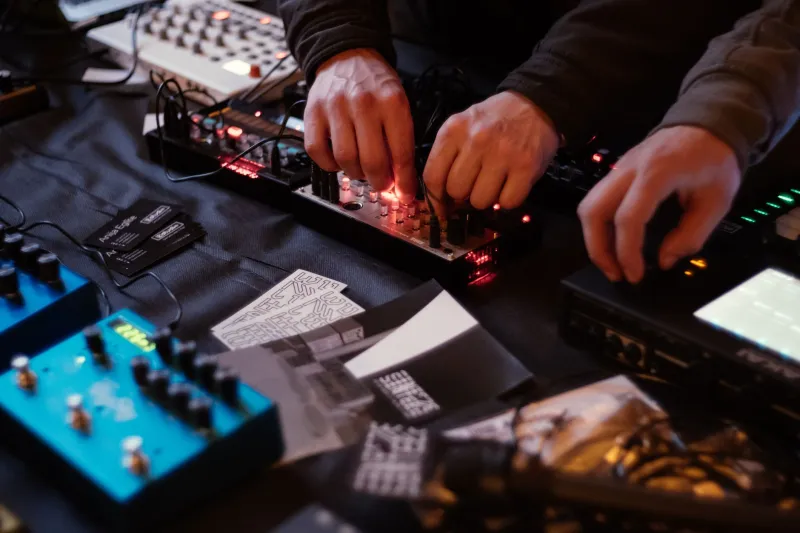
Other producers are taking the vintage-poly sound in weirder directions: feeding the outputs through modular systems, running them into tape loops, using MIDI to sequence them in ways their original designers never imagined. The combination of 1970s polyphonic circuitry and contemporary experimental production methods creates something genuinely new — music that feels simultaneously ancient and alien.
What ties it together is an ethos that fits squarely with everything LSD Muzic has always been about: the rejection of the clean, the corporate, the perfectly rendered. These machines weren't designed to be broken. But they got that way honestly, through time and use and neglect and the simple physics of entropy. And now they're singing again.
The Graveyard That Grew a Garden
Not every vintage polysynth is worth saving. Some are too far gone — boards corroded beyond repair, unobtainium chips missing, cases cracked in ways that can't be fixed. The hunters know this. Part of the culture is learning to recognize what can be resurrected and what should be honored and let go.
But the ones that come back? They come back different. Scarred and strange and full of a character that no amount of digital modeling has ever convincingly replicated. In an era when music production has never been more accessible or more homogenized, there's something genuinely radical about pulling a forty-year-old keyboard out of a dead stranger's garage and making it say something new.
The synth graveyard isn't a place of endings. Turns out it was a starting point the whole time.